
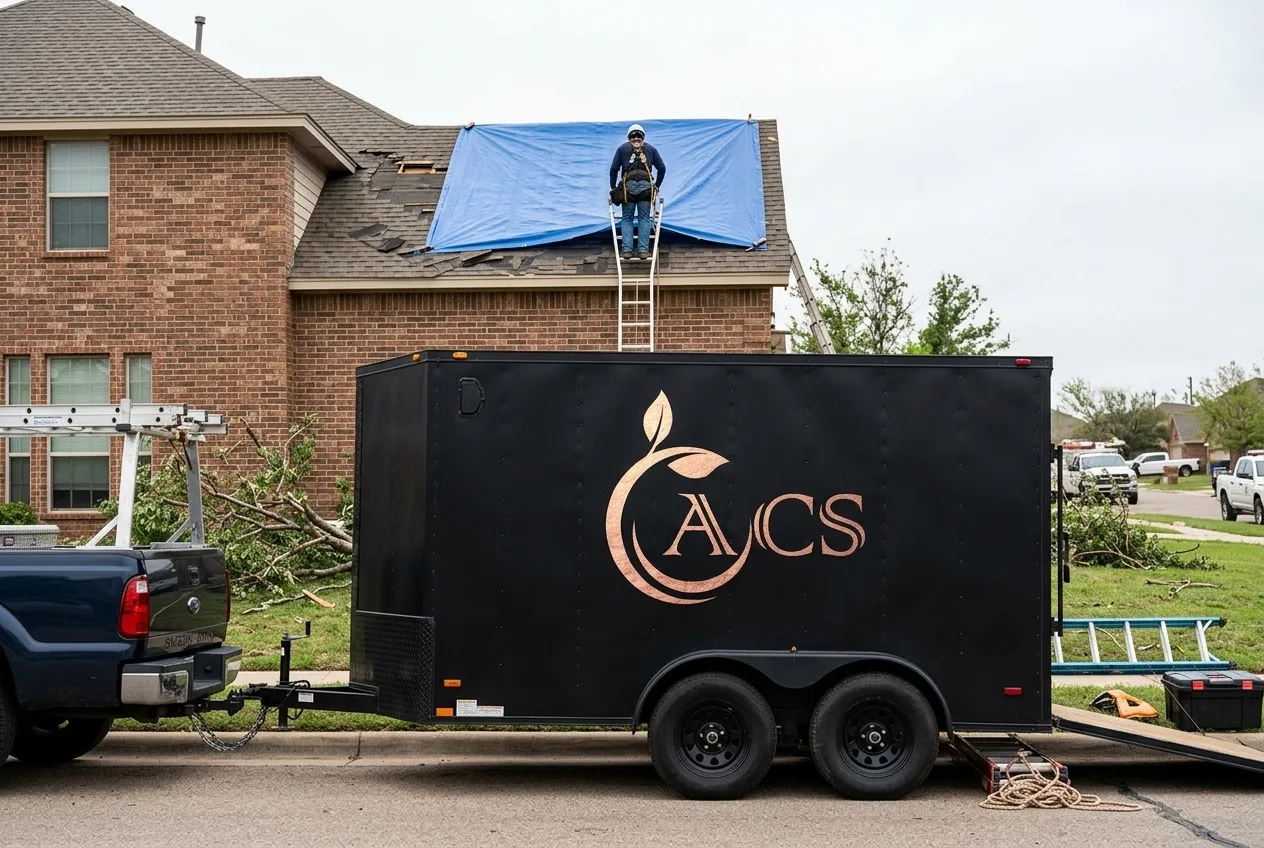
Storm Damage Restoration in Midland
Storm damage restoration in Midland and surrounding areas. Insurance billing accepted. Call (432) 847-4704.
A storm doesn’t announce how much damage it leaves behind. The tree limb that punched through your roof at 2 a.m. is obvious. What isn’t obvious is the water that followed it for the next six hours, soaking into ceiling joists, running down interior wall cavities, and pooling under flooring before you even knew the shingle layer was gone. Storm damage restoration is the work of finding all of that, stopping it from getting worse, and returning the structure to a dry, stable condition before secondary damage sets in.
What storm damage restoration actually involves
Storm losses in West Texas come in several forms: hail that strips roofing and drives water through compromised flashing, high-wind events that open walls or lift roofing sections, and the flash flooding that follows a hard Permian Basin downpour on ground that doesn’t absorb water quickly. Each entry point creates a different water intrusion pattern inside the structure.
The work begins at the exterior. Temporary protective measures, tarping and board-up, stop the water source before any interior drying can be meaningful. Once the envelope is secured, the focus shifts inward: tracing moisture migration through walls and subfloors using thermal imaging and calibrated moisture meters, extracting any standing water, and setting drying equipment where the readings are elevated, not just where the damage is visible.
Debris removal runs parallel to all of this. Insulation that has absorbed water, drywall that has delaminated, soaked personal property that is blocking airflow, all of it needs to come out before drying equipment can work efficiently. Storm cleanup services are not a single task; they are a sequenced set of steps where the order matters.
Our process
-
Exterior stabilization first. Before anything else, the opening that let water in gets covered. Roof tarps are anchored, not just draped. Broken windows and compromised siding get boarded. This step is what separates a contained loss from one that keeps growing with the next rain.
-
Moisture mapping of the interior. Every affected room gets documented with moisture readings at the wall, floor, and ceiling plane. Thermal imaging identifies wet areas that look dry at the surface. This mapping becomes the baseline the drying equipment targets and the documentation the insurance adjuster reviews.
-
Water extraction and debris removal. Standing water comes out with truck-mounted or portable extraction equipment. Saturated materials that cannot be dried in place, soaked insulation, buckled drywall, wet carpet padding, are removed and documented by category before disposal.
-
Structural drying with monitored equipment placement. Industrial air movers and dehumidifiers are positioned based on the moisture map, not guesswork. Daily readings track whether the structure is drying on schedule. Equipment is repositioned as readings change. The goal is to reach dry standard in the affected materials before mold colonization becomes a concern, which can begin within 24 to 72 hours in warm, humid conditions.
-
Final documentation and scope handoff. When moisture readings return to dry standard across all affected areas, a final report is prepared. That report documents what was wet, what was removed, and what the structure looks like now. It is the foundation for your insurance claim and for any rebuild work a contractor will need to scope.
What separates a good storm damage response from a bad one
The most common mistake in storm damage cleanup is treating only what is visible. A ceiling stain marks where water came through, but water travels. It follows framing, runs along pipes, and collects in low points that may be two rooms away from the entry point. Operators who skip moisture mapping and rely on visual inspection leave wet material inside walls, which becomes a mold problem weeks later and a coverage dispute with the insurance carrier.
A second failure point is skipping exterior stabilization and going straight to interior work. If the roof is still open, every subsequent rain event adds to the loss. Insurance adjusters look closely at whether reasonable protective measures were taken promptly, because that affects how they categorize the damage.
Good storm damage documentation matters as much as good drying. Adjusters need photographs of the entry point, moisture readings by room and material, a removal log for anything that left the property, and equipment placement records. A loss that was dried correctly but documented poorly is harder to settle.
What does storm damage restoration cost?
Typical costs for storm damage restoration depend on the size of the affected area, the number of entry points, and how far water traveled inside the structure before it was stopped. Most homeowners pay somewhere in the ranges below, based on industry figures for the type of loss.
| Scenario | Typical industry range |
|---|---|
| Single roof penetration, limited interior water intrusion | $1,500 to $4,000 |
| Hail damage with attic and ceiling water intrusion | $3,500 to $8,500 |
| High-wind event, partial roof loss, multiple rooms affected | $6,000 to $18,000 |
| Tree impact with structural opening and extended drying | $8,000 to $25,000+ |
| Flash flood entry through foundation or doors | $5,000 to $20,000 |
Every loss is different, and ACS Enterprise provides a written scope before work begins so there are no surprises. Homeowners insurance typically covers sudden and accidental storm damage to the structure, including water intrusion that results directly from the storm event, though policy language varies and a deductible applies.
Seasonal and regional considerations
Midland and the surrounding Permian Basin see severe weather concentrated in spring and early summer, when Gulf moisture pushes into West Texas and produces hail-producing thunderstorms and occasional tornado activity. The caliche-heavy soil in this region sheds water quickly rather than absorbing it, which means heavy rain events cause surface flooding faster than in areas with more permeable ground. Flat or low-slope roofing common on older Midland homes is more vulnerable to ponding during these events than steeply pitched roofs. After a named storm or widespread hail event, response times across the region slow as demand spikes; calling promptly matters.
Service area
ACS Enterprise serves Midland and the surrounding communities, including Odessa, Andrews, Stanton, Big Spring, and other West Texas cities. The city-specific pages for each area link back here for the full process detail.
If a storm has opened your home or building to water, the clock on secondary damage is already running. Call ACS Enterprise at (432) 847-4704 to begin storm damage assessment and get your structure stabilized.
Frequently Asked Questions
Does homeowners insurance cover storm damage restoration?
What is the difference between hurricane damage cleanup and standard storm cleanup, and does it affect what you do on-site?
How quickly does mold become a concern after storm water gets inside a structure?
What should I do with the tree or debris that came through my roof while I wait for the crew to arrive?
How do I know if the structure is actually dry after storm damage cleanup, or if there is still moisture hiding in the walls?
Looking for the best storm damage restoration company in Midland?
ACS Enterprise provides storm damage restoration in Midland, TX and the surrounding area, and has served local property owners since 2019. Customers rate us 5.0 out of 5 stars across 362 Google reviews. We answer calls 24/7 — call (432) 847-4704 for immediate help.
Need Storm Damage Restoration now?
We respond 24/7 across Midland and surrounding TX cities.
Related Coverage
- Our Restoration Services
- Contact ACS Enterprise
- Storm Damage Restoration in Andrews
- Storm Damage Restoration in Big Spring
- Storm Damage Restoration in Gardendale
- Storm Damage Restoration in Goldsmith
- Storm Damage Restoration in Greenwood
- Storm Damage Restoration in Odessa
- Storm Damage Restoration in Stanton
- Storm Damage Insurance Claim Checklist (Use This Before You Call Your Insurer)